
In sand, salt spray, and sub-zero cold, zippers become mission-critical. Packs, shelters, and protective suits need closures that keep operating when contaminated, resist corrosion, and stay smooth through thousands of cycles. Lenzip builds defense-grade zipper systems with verified environmental durability, low-noise glide, and lot-traceable materials—so you can spec with confidence. Pair mission requirements with the right custom zippers, matched sliders, and continuous chain—all from a single source.
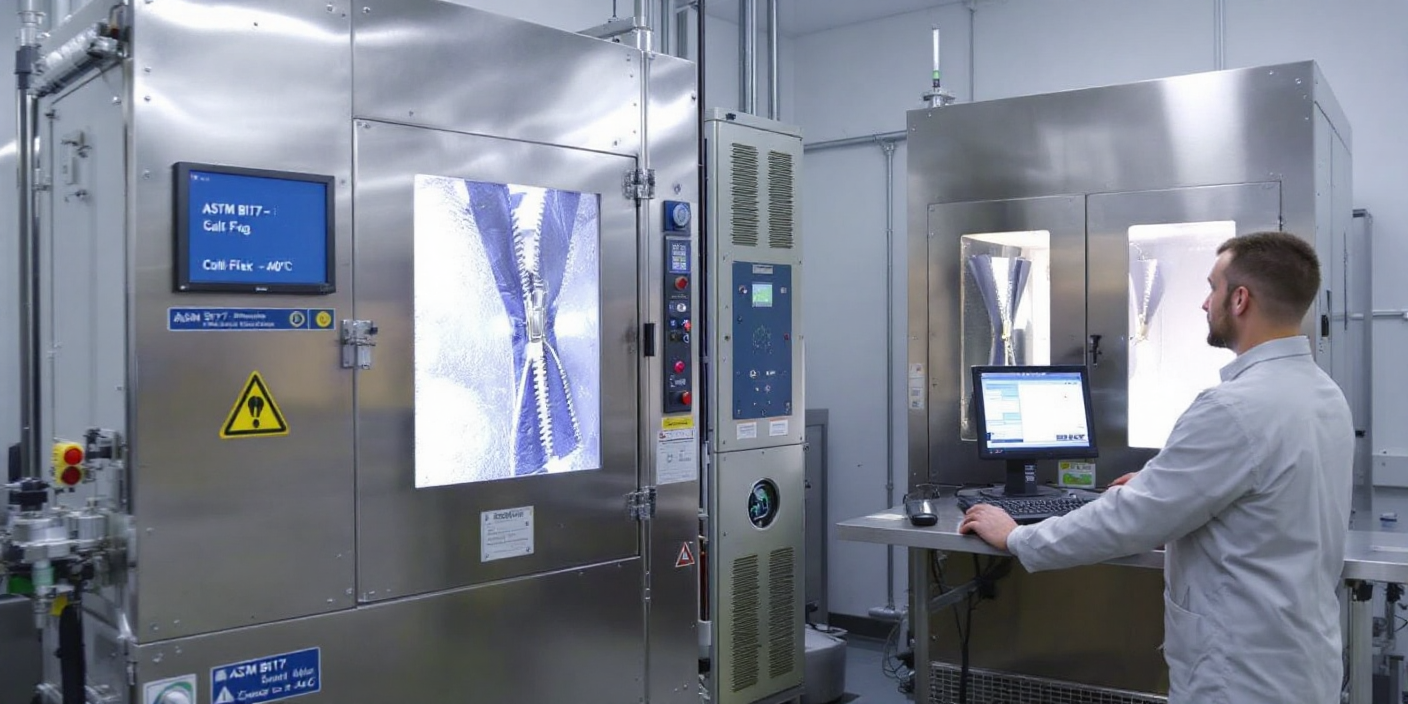
Why it matters: clean baselines around ≤5.0 N (#5) and ≤7.0 N (#8) give you predictable glide forces; contaminated operation typically remains ~2× baseline. Cold-flex to −30 °C (program-dependent) and salt-fog endurance to 240–600 hrs (ASTM B117) are available in our test matrix.
Built for Harsh, Multi-Environment Missions
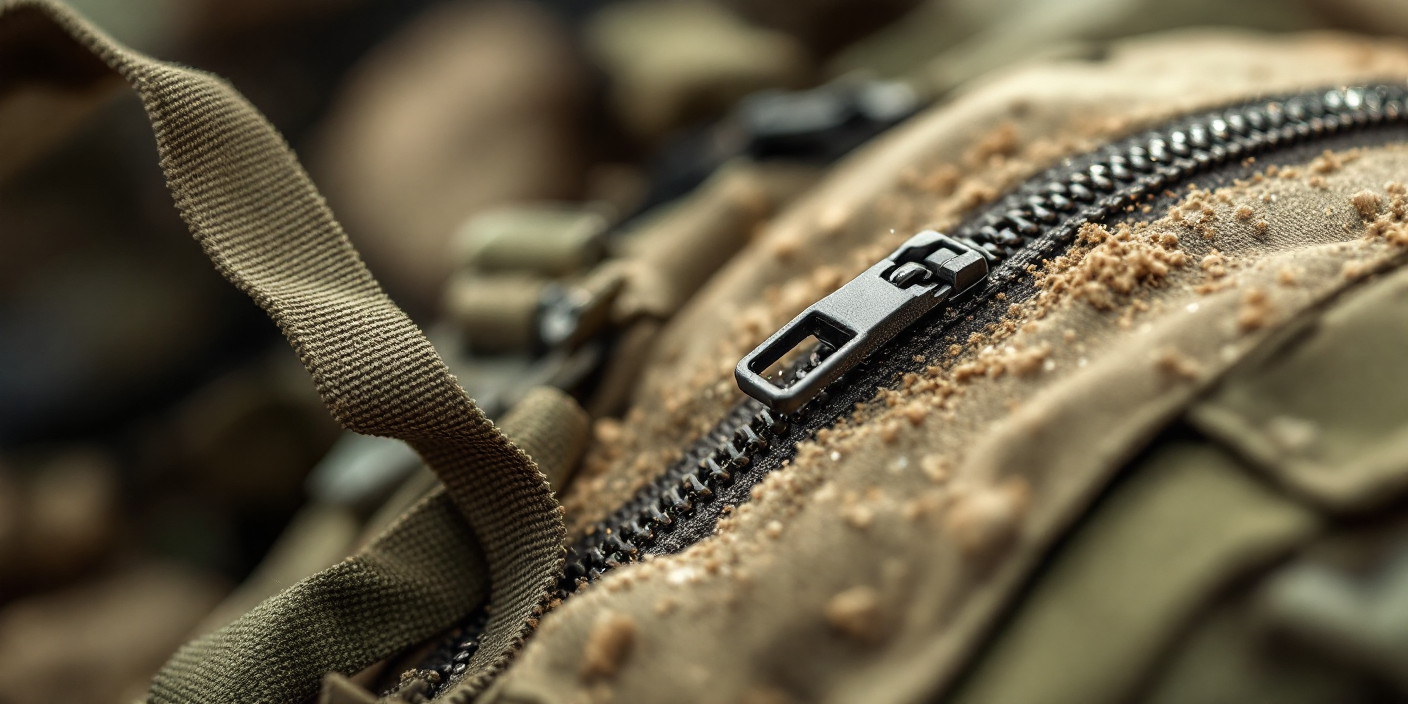
Desert fines infiltrate standard chains and bind sliders. We use anti-jam element geometry—wider root spacing and tuned flank angles—to create escape paths so grit clears while interlock strength holds under load. In littoral zones, passivated stainless or zinc-free alloys prevent galvanic attack; hardware is qualified in ASTM B117 chambers with no loss of function at documented hour marks. UV is another long-term failure driver: TPU/PU-coated, low-wick polyester tapes retain strength after ASTM G154 UVA-340 cycles, limiting embrittlement and chalking across seasons. For cold weather, low-temperature formulations verified by cold-flex protocols maintain operability to −30 °C; deeper cold is achievable with specialty builds.
- Sand: anti-jam profiles expel fines instead of trapping them.
- Salt: corrosion-safe metals + passivation resist chloride attack (240–600 hrs).
- UV/cold: strength retention under G154; operability verified at −30 °C.
Low-Noise Glide & Anti-Jam Operation
Noise discipline matters. Polished slider channels and refined guide wedges reduce scrape and chatter; low-reflect/matte finishes avoid glint without flaking under fog exposure. Under load, tuned wedge angles maintain full meshing even when the chain is slightly misaligned by fabric tension. In practice, that means you can plan around human-operable forces in real field conditions rather than lab-only numbers.
- Clean glide targets: ≤5.0 N (#5), ≤7.0 N (#8).
- Contaminated glide: typically ≤~2× baseline with basic field care.
- Wide-entry sliders: help corners and thick-canvas transitions.
Corrosion-Safe Hardware & UV-Stable Tapes
Hardware longevity starts with the right metals, then finishes. We specify 300-series stainless or zinc-free alloys, passivated for a self-healing oxide layer; optional matte coats are qualified not to blister or bubble under B117. On the textile side, low-wick polyester tapes with TPU/PU help block capillary ingress and shed water. Where programs require flame resistance, meta-aramid (Nomex®) tape pathways are available—validated against your FR spec during qualification—without sacrificing mechanical performance.
- Metals: stainless / zinc-free + passivation; matte/low-reflect options.
- Tapes: low-wick polyester with TPU/PU coatings for UV and moisture.
- FR: Nomex® tape options upon program request.
Documented Testing You Can Cite
We publish the methods and acceptance targets your QA team needs: ASTM B117 salt fog (hours to first corrosion, functional checks), ASTM G154 UV (retained tensile and color), cold-flex and thermal cycling, plus glide-force curves in clean and contaminated states. Mechanical life testing targets 10k+ cycles (application-dependent), and abrasion at tape edges is qualified via Taber/Martindale.
- Environmental: salt fog 240–600 hrs; UV retention; thermal cycling.
- Mechanical: cycle life, seam retention, glide-force curves.
- Docs: CAD, datasheets, acceptance targets, lot/batch traceability.
Chain & Seal Selection (Right-Sizing the Spec)
Not every closure needs to be airtight. For packs and outerwear, water-resistant DWR/film chains shed splash and rain while staying easy to operate. For immersion, survival, or CBRN-class interfaces, airtight/watertight constructions with elastomeric seals deliver hermetic performance—but add mass and closing force, and require seal-friendly maintenance.
- Gauges: #3–#5 admin/light pouches; #7–#8 load-bearing; #10 shelters/covers.
- Seals: water-resistant for weather; airtight/watertight for pressure/isolation.
- Formats: open-end, closed-end, two-way, right-hand open-end.
Integration & Field Serviceability
For woven pack fabrics (Cordura®, canvas), stitch with UV-resistant poly/PTFE thread; use double/triple rows and bartacks at stress points; seal edges where wicking is a concern. For coated substrates (TPU/PU/PVC), RF/heat-sealed integration removes needle holes entirely—we’ll supply a starting process window (power/dwell/pressure) to accelerate qualification. Source matched components from custom zippers, sliders, and continuous zippers to simplify builds and spares.
- Stitched: UV thread, load-spreading rows, sealed edges.
- RF/heat-sealed: needle-hole-free seams with supplied weld window.
- Service: rinse, dry, lube; replace sliders at first sign of drag.
Applications We Support
Tactical packs, plate carriers, and utility/admin pouches; rapid-deployment shelters and inflatable/airtight field structures; vehicle/equipment covers and aviation ground enclosures; flight/survival suits and specialized airtight interfaces (program-qualified). See All Products for parts and options.
Seal Your Defense/Tactical Spec with Lenzip
Send your environment and load details (sand/salt/UV/cold), target seal level (water-resistant vs airtight), and gauge/format needs. We’ll return a spec-matched zipper construction (tape/coating, chain size, slider/hardware), integration guidance (sewn or RF/heat-sealed), and QC targets you can hand to production. U.S.-owned • Engineering support • Minimums as low as 25 units.
- Request a Defense/Tactical Spec Match → Request a Quote
- Quick help: Customer Support
- Browse components: Custom Zippers · Sliders · Continuous Zippers · All Products