
Engineering the Backbone of Every Zipper
In zipper engineering, the tape is far more than a strip of fabric—it’s the foundation on which every closure’s strength and reliability depend. Its construction, including weave pattern, denier rating, and tensile strength, directly determines how well a zipper performs under load, motion, and environmental exposure. Whether used in technical apparel, automotive interiors, or industrial containment systems, zipper tape construction is central to long-term performance and safety. At LenZip USA, this principle drives every design decision. As one of the oldest American zipper manufacturers, LenZip develops, tests, and engineers zipper tapes built for tensile consistency, UV stability, and resistance to chemical and mechanical wear. By controlling the complete manufacturing process—from polymer selection to ASTM-certified lab testing—LenZip ensures that each product delivers durability and precision fit across a wide range of OEM and specialty applications.
The company’s experience in advanced zipper engineering makes it clear that the fabric component supporting the teeth or coil is not secondary; it is a structural component that determines the product’s entire lifecycle. A well-constructed zipper tape resists stretching, fraying, or distortion, even after thousands of cycles in extreme conditions, from saltwater environments to high-temperature industrial facilities. For an in-depth look at this overlooked but vital component, see The Hidden Role of Zipper Tape.
Zipper Tape Defined and Its Functional Role
Zipper tape is the textile substrate that carries every mechanical load applied during a zipper’s operation. It anchors the chain—whether made of metal, plastic, or nylon coil—to the host material, spreading the tension that occurs during repeated opening and closing. The tape’s fiber, weave, and finish all contribute to how the zipper behaves under stress. Its ability to flex without tearing, retain shape during sewing, and resist moisture or chemical degradation defines zipper longevity and overall system integrity.
A zipper tape’s design must account for a variety of forces: lateral pull when users separate the chain, tensile load when garments or panels are stretched, and the localized pressure exerted by each slider pass. When these factors are properly balanced through optimized denier, coating, and weave selection, the zipper can operate flawlessly even in the harshest environments. Testing confirms that a zipper’s weakest link is rarely its teeth—it’s the underlying fabric, which makes understanding tape engineering critical. For an overview of mechanical validation, refer to Zipper Load Testing Explained.
Weave Architecture: The Framework of Strength
The weave structure of a zipper tape determines its flexibility, thickness, and resistance to mechanical wear. A plain weave interlaces warp and weft threads in a one-over-one pattern, producing uniform tension distribution and low elongation. It’s used widely in garment, upholstery, and luggage zippers because it provides consistent dimensional stability at a competitive cost. A twill weave, by contrast, introduces a diagonal rib pattern that improves flexibility and abrasion resistance. This design allows the zipper tape to conform to curved seams without buckling or distorting, making it particularly valuable in automotive interiors, backpacks, and outdoor apparel where the zipper must bend naturally with the fabric.
For even greater tear strength and an appealing aesthetic, a herringbone weave—a variation of twill that reverses its diagonal pattern—offers superior tensile characteristics and texture. It’s often chosen for industrial covers, protective outerwear, and luxury applications where strength and design appeal must coexist. In higher-performance contexts, LenZip also engineers hybrid and multi-axial weaves, combining directional reinforcement with dense warp structures. These innovations reduce bias distortion and creep over long-term use, a necessity for aerospace, safety, and containment-grade products. Each weave type undergoes inspection under magnification for uniform yarn spacing and edge integrity before coating or finishing, ensuring consistent performance across production batches. Learn more about textile finishing in Zipper Materials & Finishes.
Denier: The Metric Behind Tape Durability
Denier is the unit used to measure fiber thickness and, by extension, a zipper tape’s strength-to-weight ratio. It represents the weight in grams of 9,000 meters of yarn. Lower-denier fibers produce soft, flexible tapes ideal for fashion or lightweight applications, while higher-denier fibers yield stronger, more abrasion-resistant structures for industrial and marine environments. A tape woven with 1000D polyester or nylon, for instance, can withstand forces that would tear a 420D or 600D fabric, making it indispensable for outdoor tents, tactical gear, or heavy-duty enclosures.
Zipper denier selection must also correspond to chain type. Metal teeth and large molded elements require stiffer, high-denier tapes to resist edge curling, while coil zippers in apparel benefit from fine, lighter deniers that maintain flexibility and comfort. By standardizing denier ranges for each application, LenZip ensures predictable performance across chain sizes #3 to #12. For assistance in gauge and size compatibility, review Zipper Gauge & Chain Size Chart.
Material Selection: Polyester, Nylon, and Advanced Fibers
The fiber composition of the zipper tape determines its chemical resistance, flexibility, and response to environmental factors. Polyester zipper tape offers superior UV stability, colorfastness, and chemical resistance, making it the top choice for marine and outdoor gear that faces constant sun exposure or moisture. Nylon zipper tape, with its inherent stretch and smooth texture, is preferred in apparel and soft goods where pliability and comfort matter. In technical and safety markets, aramid and meta-aramid fibers provide exceptional fire resistance and structural integrity under high heat, commonly specified in fire-resistant zippers.
For applications where fluid ingress must be prevented, coatings play a defining role. Polyurethane (PU) and thermoplastic polyurethane (TPU) layers transform standard woven tapes into sealed systems suitable for RF-weldable zippers. These coated tapes enable air-tight and water-resistant seams in medical, industrial, and inflatable structures. Additional fluoropolymer or silicone finishes reduce friction and repel dirt, maintaining consistent slider movement over time. Each coating is tested under ASTM D751 to confirm adhesion and flexibility across a wide range of operating temperatures.
Tensile Strength Testing and ASTM Standards
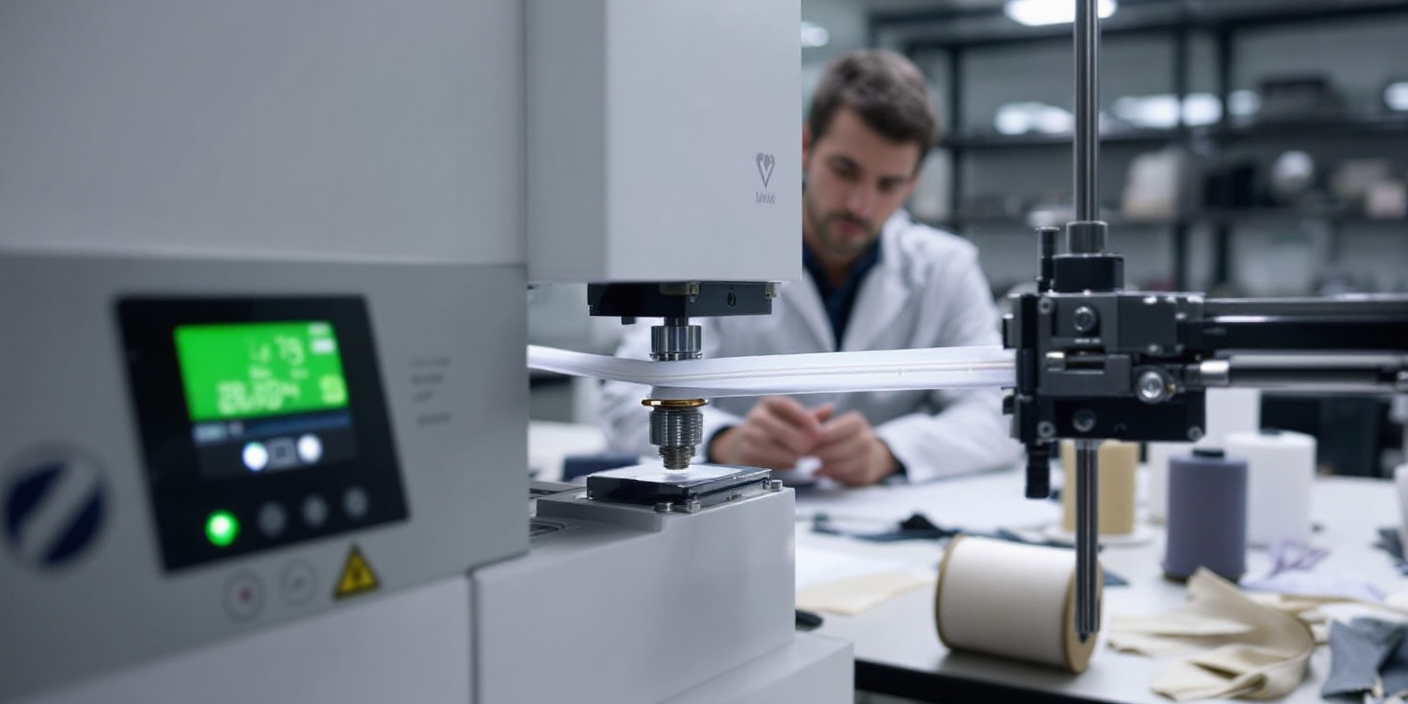
Tensile strength defines how much force a zipper tape can endure before failure. LenZip’s laboratory testing follows ASTM D2061, which measures breaking strength, chain slippage, and slider fatigue. Complementary standards like ASTM D3657 define tape dimensions and tolerances, while ASTM D751 assesses coating adhesion. During testing, sample tapes are mounted under controlled tension and exposed to repeated flex and load cycles to simulate years of use. The results quantify both load-bearing capacity and residual elongation—key indicators of long-term performance.
At LenZip’s testing facility, engineers expose tapes to salt fog, UV, and humidity to simulate marine and industrial environments. Abrasion, burst, and peel strength evaluations confirm that even after extreme exposure, the fabric maintains its tensile profile. LenZip’s process ensures every zipper tape batch meets or exceeds OEM standards before integration into full zipper assemblies. Details of testing methodology are available in Zipper Testing Standards.
Integration: Bonding the Tape and Chain
The junction between tape and chain is one of the most critical interfaces in zipper engineering. For metal zippers, each brass or aluminum tooth is precision-crimped into the woven tape using calibrated mechanical pressure to maintain tooth alignment and prevent pullout. In coil zippers, continuous monofilament is stitched or welded directly into the tape edge, with stitch angle and density optimized for peel resistance. Molded zippers rely on injection molding, where molten plastic forms the teeth directly onto the tape, creating a seamless bond ideal for water-resistant or heavy-duty applications.
Each method is monitored for adhesion uniformity, thermal stability, and chain alignment. A mismatch in tape tension or improper molding temperature can cause misalignment, reduced flexibility, or chain distortion. For continuous chain applications—such as industrial curtain zippers or marine fabric enclosures—reinforced tapes with anti-fray selvedge and lock-thread reinforcement prevent unraveling after cutting. This construction allows installers to trim lengths in the field without compromising tensile integrity.
Surface Coatings, Treatments, and Environmental Protection
Coatings enhance zipper tape performance across climates and industries. Polyurethane films add flexible water resistance without stiffening the fabric. Thermoplastic polyurethane provides RF weldability for hermetic seams. In addition to PU and TPU coatings, LenZip applies hydrophobic and UV-stable finishes that extend service life in outdoor or marine conditions.
For chemical or industrial environments, fluoropolymer and silicone-based treatments minimize surface friction, preventing debris from embedding in fibers and maintaining smooth slider movement. Some tapes also feature Teflon coatings that resist hydrocarbon exposure and UV degradation. Coating adhesion is verified through repeated flex and heat cycles to ensure no cracking or delamination. These advanced finishes are the hallmark of long-lasting industrial-grade zippers.
Dimensional Consistency and Manufacturing Precision
Dimensional uniformity is essential for global interchangeability of zipper components. The ASTM D3657 standard governs zipper size designation, ensuring that the width of the tape, chain pitch, and slider entry remain consistent between manufacturers. LenZip’s vertical manufacturing process monitors warp tension, fiber density, and chain insertion to maintain tolerances within ±0.05 mm.
Consistency prevents issues such as fabric puckering, slider mismatch, and premature chain separation. Tape thickness, selvedge edge stability, and color uniformity are also inspected under optical systems. These precision controls allow OEM customers to integrate LenZip components seamlessly into automated assembly processes or replacement part inventories.
Industry Applications: Tailoring Zipper Tape to Every Sector
Every industry imposes unique demands on zipper performance. In aerospace and defense, tapes must meet flame-retardant standards and resist degradation in wide temperature ranges. LenZip’s aramid-reinforced tapes are lightweight yet capable of maintaining strength under extreme thermal conditions. In the marine sector, polyester-based, high-denier tapes resist UV exposure and hydrolysis, critical for sails, seat covers, and protective enclosures.
In automotive manufacturing, twill and hybrid weaves ensure flexibility for seat integration while preventing fray at seam intersections. These tapes support the movement and vibration of daily operation without deformation. For medical and cleanroom products, TPU-coated tapes allow sterilization and seamless sealing for antimicrobial zippers. Industrial containment systems, such as airtight zippers, rely on high-denier, multi-layer tapes that maintain air and chemical barriers over long-term service life.
Each product line benefits from LenZip’s technical consultation, ensuring denier, weave, and coating specifications align precisely with real-world use. Further examples are detailed in Industry Applications.

Installation, Maintenance, and Longevity
Proper integration is crucial to maximizing the life of any zipper tape. When installing, maintaining even stitch tension and accurate alignment ensures that the tape does not distort under pressure. Using stabilizing materials or basting tape can help maintain precise seam positioning on flexible or lightweight textiles. Once installed, zipper tapes should be inspected for edge wear, UV fading, and coating integrity.
Regular cleaning, especially for zippers used in marine or industrial environments, prevents debris accumulation that can cause premature wear. Rinsing with fresh water and applying silicone-based lubricants helps maintain both tape and slider functionality. Preventive care dramatically extends lifespan and reduces warranty claims. For full guidance on upkeep, refer to Zipper Maintenance & Care.
Conclusion: Building Reliability from the Fabric Up
Behind every dependable zipper lies the hidden precision of zipper tape construction. From the molecular structure of the fibers to the geometry of the weave and the durability of applied coatings, every decision in the tape design process determines the zipper’s performance in the field. By combining meticulous engineering, ASTM-compliant testing, and American manufacturing excellence, LenZip USA delivers zipper tapes that meet the strictest specifications for tensile strength, flexibility, and environmental resistance.
Whether you are developing marine-grade covers, aerospace components, or industrial safety gear, partnering with LenZip means gaining access to expertise that transforms a simple fastener into a mission-critical component. To discuss custom solutions or source tested, high-performance zipper tapes, visit LenZip’s Request a Quote page or explore Zipper Materials & Finishes for detailed composition data.
Frequently Asked Questions
What determines zipper tape strength?
Zipper tape strength is defined by its denier and weave architecture. High-denier fibers combined with structured weaves like twill or herringbone offer exceptional resistance to stretching, flexing, and environmental degradation, providing superior tensile durability under repeated use.
Which material performs best outdoors?
Polyester zipper tape provides unmatched resistance to UV, heat, and moisture, outperforming nylon in marine and industrial applications. It retains shape and color even after years of exposure to sunlight and saltwater.
How is zipper tape tested for durability?
Tape undergoes tensile, peel, and flex testing under ASTM D2061, followed by environmental simulations such as UV, hydrolysis, and salt-fog exposure. LenZip’s laboratory confirms performance across every parameter before product release.
Can zipper tape be made waterproof?
Yes. Thermoplastic polyurethane (TPU) and polyurethane (PU) coatings produce water-resistant zipper tapes ideal for rainwear, marine covers, and industrial sealing systems. These coatings ensure consistent flexibility and seam integrity across temperature extremes.
Does LenZip offer customization?
LenZip provides fully customizable zipper tape options—including width, color, denier, weave structure, and coating finish—to meet the precise requirements of each OEM or product designer.