
OEMs sourcing bulk zippers or wholesale zippers make a decision that affects every layer of their manufacturing process—product performance, warranty costs, supply-chain reliability, and brand reputation. At first glance, imported zippers appear cheaper. But when failures occur under tension, during environmental exposure, or in high-cycle applications, the cost difference evaporates. Domestic zippers from LenZip, engineered in the U.S. with verifiable materials and controlled production processes, deliver a level of quality and predictability that imported alternatives often cannot match.
Imported zippers are typically produced in large, commodity-driven factories using variable alloys, inconsistent polymer quality, lower-denier tapes, and fluctuating plating chemistry. Because these factories operate at massive scale, batch consistency is rarely guaranteed. Gauge drift, plating adhesion issues, and tooth misalignment occur frequently, especially in #5 and #10 gauges commonly used in industrial, marine, tactical, and apparel applications. These issues do not appear immediately—they appear in the field, after the product has shipped, which is exactly when OEMs cannot afford failure.
In contrast, U.S.-manufactured zippers made by LenZip follow documented process control from raw material to finished product. Every component—including metal teeth, coil monofilament, molded elements, sliders, and high-denier tapes—undergoes engineering-grade validation. This includes tensile testing, corrosion testing, cycle testing, and environmental simulation according to ASTM and ISO standards. OEMs receive the traceability and documentation necessary for industries such as aerospace, automotive, marine fabrication, industrial textiles, tactical gear, and medical products.
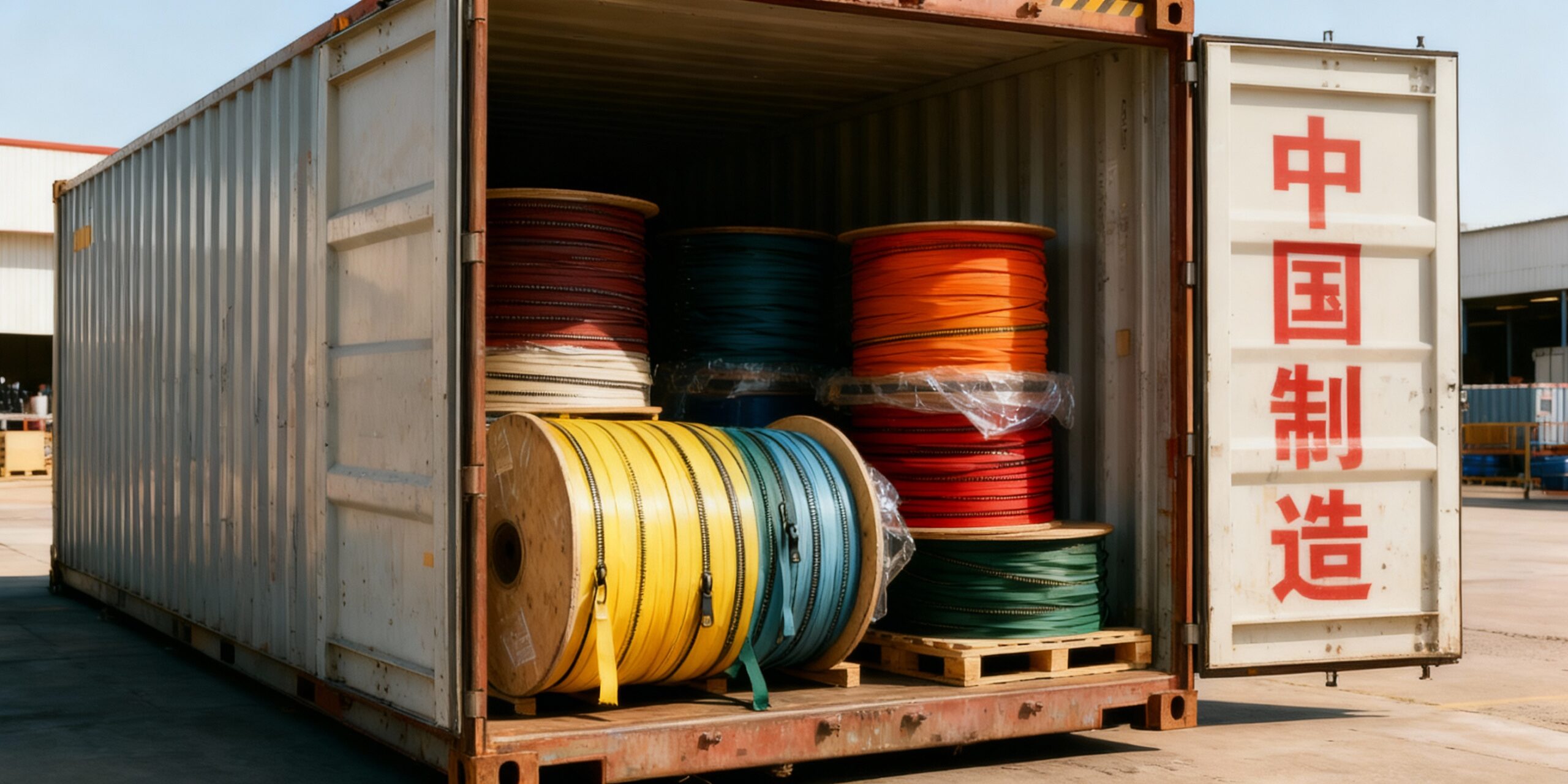
U.S.-Made vs Imported Zippers: Engineering Differences That Matter
The most significant advantage of domestic zipper production is control. U.S. manufacturing allows for purity of metals, stable polymer formulations, precise extrusion parameters, and controlled tape weaving. Imported zippers often rely on the lowest-cost alloy blends, resin substitutions, and high-output weaving lines with less focus on tolerance stability. This leads to brittle metal teeth, weak sliders, inconsistent tape edges, and coil tension differences within the same shipment. For products such as industrial curtains, marine covers, and technical apparel, these inconsistencies lead directly to premature failure.
Gauge precision is another major concern. If the chain width, tooth pitch, or coil tension deviates even slightly, sliders will not track properly. OEMs dealing with imported zippers commonly face jamming issues, tooth separation, or slider derailment. Manufacturers referencing LenZip’s gauge and chain size chart can verify the dimensional accuracy needed for consistent sewing, RF welding, and pattern fitting.
Material selection also plays a critical role. Domestic zippers leverage certified metals and polymers tested for UV exposure, tensile load, chemical resistance, and saltwater durability. See zipper materials and finishes and nylon vs polypropylene marine applications for material-specific performance data. Imported zippers rarely disclose batch-level material composition, leaving OEMs blind to long-term durability.
ASTM, ISO & MIL-SPEC Testing: A Requirement Imports Rarely Meet
OEMs supplying military, medical, aerospace, industrial, or marine markets require documented compliance to ASTM and MIL-SPEC benchmarks. LenZip’s testing standards outline tensile strength, slider fatigue, abrasion resistance, corrosion resistance, environmental cycling, and coating adhesion. These tests simulate real-world usage to ensure reliability.
Imported zippers seldom offer repeatable compliance documentation. Some may provide initial sample certifications; however, these documents rarely represent full-scale production. For regulated industries such as aerospace and aviation textiles, military-grade enclosures, or medical containment systems, this lack of traceability creates unacceptable risk.
What OEMs MUST Compare Before Buying Bulk Zippers
Material certification, alloy purity, and polymer consistency
Documentation for ASTM, MIL-SPEC, NFPA, or ISO testing
Gauge accuracy compared to the zipper chain size chart
Tape denier, weave stability, UV resistance, and edge integrity
Slider construction, plating thickness, and corrosion resistance
Cycle testing, tensile loads, and fatigue performance
MOQ flexibility, prototyping availability, and engineering support
Lead-time stability and immunity to international shipping delays
Warranty structure, batch traceability, and supplier transparency
Hidden Lifecycle Costs of Imported Zippers
Higher field failure rates that cause customer complaints, returns, and warranty claims
Production delays caused by gauge drift or inconsistent chain assembly
Tape splitting, broken teeth, and slider failure that require rework
Freight disruptions, customs delays, and damage during transit
Increased long-term cost due to premature corrosion or UV breakdown
Lost brand credibility from zipper-related product failures
Price vs Value: The Economics Behind Sourcing Decisions
Most OEMs buy imported zippers because they seem cheaper on paper—often a few cents less per unit. But this calculation ignores the cost of returns, replacements, lost labor, and damaged customer trust. A single zipper failing in the field can cost 20–50 times more than the initial savings. Warranty processing costs, customer service hours, replacement shipments, and negative reviews all add up.
Domestic zippers from LenZip dramatically reduce these hidden expenses. When durability increases and failure rates drop, OEMs benefit from lower warranty exposure, smoother production, and better customer experiences. Over a product’s lifecycle, U.S.-made components almost always create a lower total cost of ownership.
Custom Engineering, Prototyping & Precision Manufacturing
Imported suppliers rarely offer meaningful customization. They operate at scale, which means OEMs must accept preset lengths, standard sliders, limited tape choices, and high MOQs. In contrast, LenZip supports engineering-driven customization for OEMs who rely on performance, not commodity-grade components.
Manufacturers can request cut-to-length builds, specialized tooth profiles, unique tape materials, custom-molded sliders, fire-resistant or chemical-resistant finishes, and complex assemblies designed to integrate with RF-welded or heat-sealed systems. Relevant engineering resources include custom-fit cut-to-length zippers, custom zipper systems, and specialized material options.
This level of support significantly reduces development time and ensures that the zipper functions as an engineered component—not an afterthought.
Environmental, Regulatory & Documentation Benefits of U.S. Production
OEMs increasingly face environmental and regulatory requirements such as RoHS, REACH, PFAS restrictions, Prop 65, and origin-traceability obligations. Imported zippers rarely come with reliable documentation for these compliance frameworks. This exposes OEMs to legal and regulatory vulnerabilities, especially when supplying aerospace, defense, medical, juvenile, or automotive products.
Because LenZip manufactures domestically, environmental compliance and supply-chain transparency meet U.S. labor and material standards. This makes documentation simple, reliable, and verifiable. Domestic manufacturing also ensures ethical labor practices, traceability, and environmental responsibility—requirements that are increasingly important in modern OEM procurement.
Application-Specific Performance Considerations
Product applications dramatically influence zipper performance requirements. In marine environments, imported zippers corrode rapidly because their plating chemistry lacks UV stabilizers and salt-resistant coatings. Domestic marine-grade engineering, such as LenZip’s marine outdoor zippers, use corrosion-resistant alloys and enhanced polymer formulations.
Aerospace and aviation textiles require dimensional accuracy and tolerance stability, as seen in aerospace zipper systems. Tactical gear requires heat-stable, IR-compliant coatings such as those found in military-grade zippers. Industrial enclosures require high-denier tapes and reinforced sliders, detailed in industrial curtain zipper applications.
Imported zippers rarely meet these specialized requirements consistently, making domestic engineering essential for performance-critical products.
Domestic Supply Chain Stability: Why U.S. Manufacturing Is Safer
The global shipping environment is unpredictable. Imported zippers face customs delays, container shortages, tariff spikes, and long lead times. OEMs depending on these shipments risk production shutdowns and missed delivery schedules.
Domestic manufacturing from a U.S. zipper supplier eliminates these variables. With shorter supply chains, faster fulfillment, and no international freight exposure, OEMs gain stable production schedules and predictable cost structures. More details on this advantage can be found at why U.S. manufacturing matters.
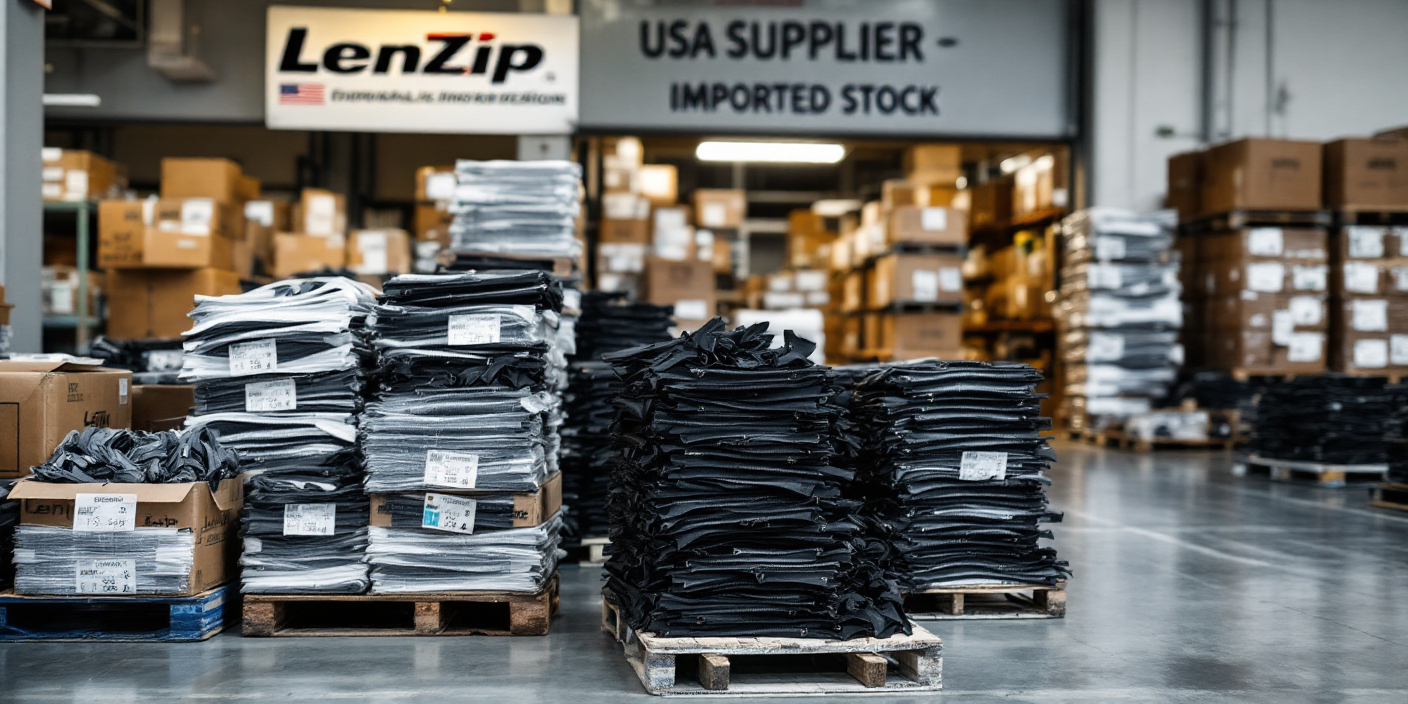
Upgrade to U.S.-Made Zipper Engineering
Enhance durability, reduce warranty claims, and stabilize your supply chain with engineered U.S.-made zippers. Explore LenZip’s full product catalog, learn from the LenZip resource library, or begin your project through request a quote…and contact us.
Conclusion
OEMs evaluating bulk zippers and wholesale zipper suppliers must analyze far more than unit cost. Imported zippers introduce risk across material quality, gauge consistency, plating durability, environmental resistance, and supply-chain stability. These risks convert to real financial losses in the form of warranty claims, rework labor, customer dissatisfaction, and schedule delays.
U.S.-made zippers from LenZip deliver superior engineering, controlled tolerances, certified materials, documented testing, and reliable domestic fulfillment. For OEMs prioritizing safety, performance, and long-term cost efficiency, domestic zipper manufacturing remains the most reliable and strategically responsible sourcing choice.
OEM Sourcing FAQ
Do imported zippers meet ASTM or military standards?
Rarely. Imported zippers often lack batch-level verification. Review zipper testing standards for required benchmarks.
Why do imported zippers fail more frequently?
Variable alloy composition, weak plating, and inconsistent gauge tolerances contribute to field failures. Learn more at zipper materials & finishes.
How does LenZip ensure consistency in industrial applications?
Through controlled process engineering and verified testing outlined in inside zipper testing.
Which zipper type should OEMs choose?
Use the zipper types explained guide or see choosing the right zipper.
How do I minimize zipper-related warranty claims?
Switching to domestically engineered zippers with stable tolerances and corrosion-resistant materials significantly reduces failures. See industrial-strength zipper applications.
Does LenZip support custom engineering?
Yes—see custom zipper builds or submit details via request a quote.